The FIIT Book
Psychotherapy today often finds itself tangled in a maze of techniques and modalities, leaving clinicians unsure how to apply them to the actual person before them. We risk losing sight of what’s truly happening within the client, as we rely on external systems rather than the client’s own inner world.

Psychotherapy today often finds itself tangled in a maze of techniques and modalities, leaving clinicians unsure how to apply them to the actual person before them. We risk losing sight of what is happening within the client, as we rely on external systems rather than the client’s own inner organization.
This model brings us back to what is inside each client. In any context, with any person, it inductively reveals what is truly present and needed. You are not applying an external map; you are engaging directly with how the client is experiencing their life—and how they are attempting, struggling, or striving to experience it differently.
For the clinician, this creates a different kind of capacity. You are no longer confined to selecting techniques or working within the limits of a modality. You are equipped to work with any client, in any situation, by determining what is actually occurring within them and what movement is possible.
The result is not generalized change, but change specific to the individual—how they experience, how they respond, how they live, and how they come to experience their life in a way they define, build, and love.
This is psychotherapy that proceeds from the person, not from the model.
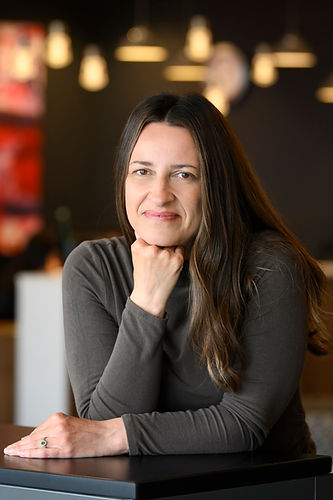
About the Author
Holding a master’s in counseling psychology, with undergraduate studies in English, history, and psychology, and a minor in philosophy, she has spent nearly two decades examining the nature and function of psychotherapy.
Her clinical work spans a wide range of populations and contexts, including complex trauma, family systems, and high-acuity mental health environments. She has worked across diverse settings within the psychotherapy and human services fields, developing a comprehensive understanding of how individuals function across conditions and circumstances.
Alongside clinical practice, she has contributed to the development of professional ethics and scope-of-practice frameworks and has provided extensive teaching and supervision to clinicians at all levels, including supervision of supervision. She is a clinical traumatologist and has delivered numerous trainings on trauma, psychotherapy process, and clinical reasoning.
She runs a psychotherapy practice, dividing her time between direct clinical work and supervision. Through this, her work has focused on the logic and process of psychotherapy itself—working with any individual who presents and articulating, in real time, what effective therapy requires.
This sustained inquiry revealed a central problem: psychotherapy had become organized around models rather than around the person.
FIIT emerged from this recognition.